
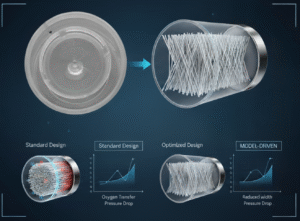
This research introduces a comprehensive theoretical model designed to calculate the complex geometric data and configuration properties of Hollow-Fiber Membrane Oxygenators (HFMOs). The goal was to establish a systematic method for evaluating and optimizing the design specifications of these critical medical devices, focusing on the micro-porous membranes. The model enables a deep understanding of how physical design parameters, such as fiber pitch and winding patterns, directly influence the operational efficiency of the oxygenator.
The study applied the model to demonstrate how adjusting fiber bundle geometry can significantly enhance mass transfer and reduce resistance. By quantifying the relationship between design features and performance characteristics (like oxygen-transfer rate and blood pressure drop), the model provides a powerful tool for rationalizing and improving future HFMO designs.
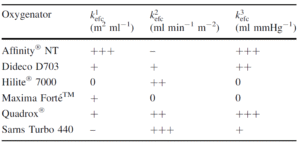
Comparison of the examined HFMOs on the basis of their efficacy factors for a blood flow rate of 5 L/min
To access the paper, please click here.