
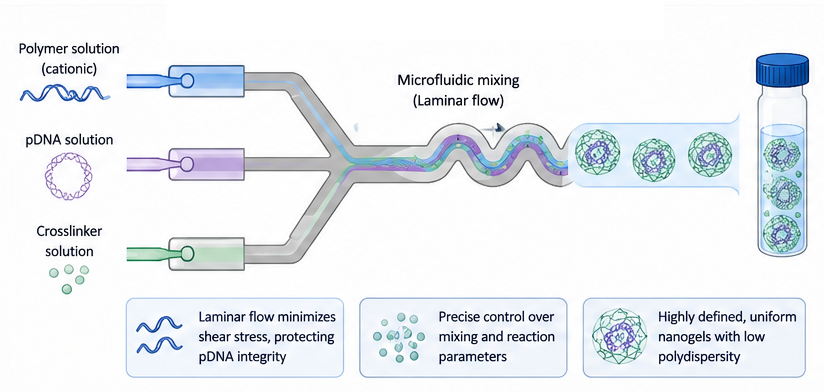
Over 70% of the gene therapy trials to date have used modified viruses such as adeno-associated virus, lentivirus, adenovirus and retrovirus. Such therapies are accompanied by a significant risk of insertional mutagenesis, high immunogenicity and expensive manufacturing procedures. As a result, there is an increased demand for safe and efficacious non-viral alternatives which can achieve high levels of gene transduction with minimal toxicities. In this project pDNA will be complexed within the nanogels and their potential as non-viral gene delivery vehicles will be determined. As for the synthesis method, the aim of the project is to formulate nanogels in a microfluidic reactor with highly defined particle characteristics. Microfluidic synthesis is a robust method that can lead to more dispersed particles and higher gene transfection properties compared to bulk synthesis method because of the laminar flow that doesn’t destroy the plasmids and the microfluidic physical aspects that lead to dispersed particle batches.