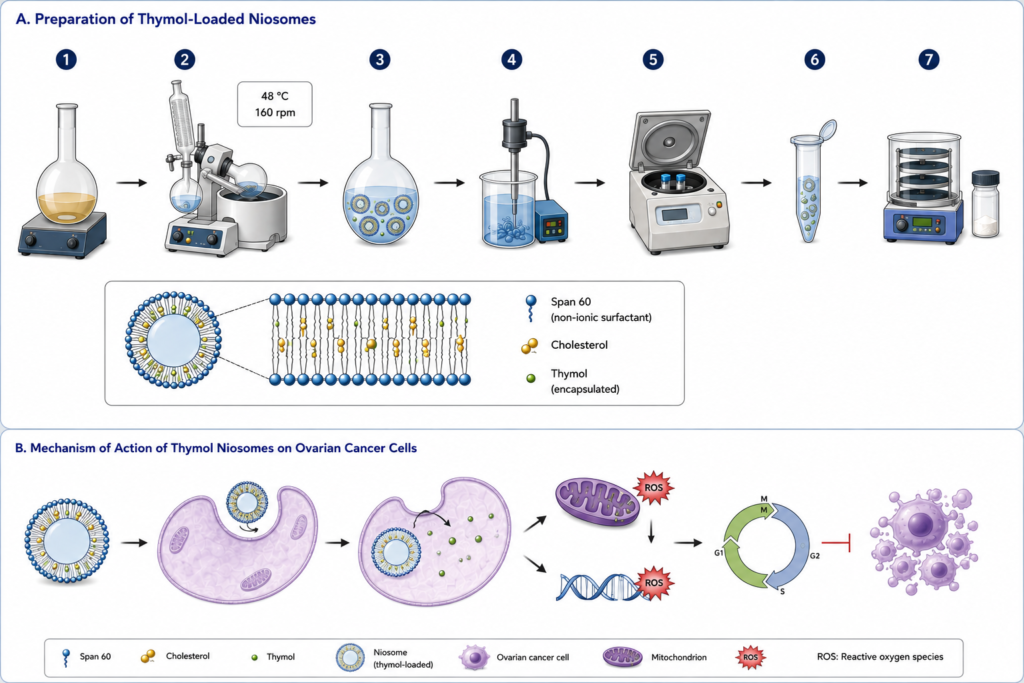
Epithelial ovarian carcinoma (EOC) is the most lethal gynecological malignancy because of late diagnosis, frequent recurrence, and resistance to conventional chemotherapy. Thymol, a natural phenolic compound derived from Thymus vulgaris, has shown promising anticancer activity by inducing oxidative stress, mitochondrial dysfunction, and apoptosis in ovarian cancer cells. However, its therapeutic application is limited by poor aqueous solubility, low bioavailability, chemical instability, and inefficient cellular uptake. To address these challenges, this project developed a thymol-loaded niosomal nanocarrier to improve the physicochemical properties and therapeutic potential of thymol. Niosomes were prepared using the thin-film hydration method, followed by sonication, purification by centrifugation, and freeze-drying to obtain a stable nanoformulation. The optimized formulation achieved an encapsulation efficiency of approximately 78%, demonstrating successful incorporation of thymol into the niosomal bilayer. Due to their excellent biocompatibility, low toxicity, and ability to encapsulate hydrophobic compounds, niosomes represent an efficient drug delivery platform. Following endocytic uptake by ovarian cancer cells, intracellular release of thymol promotes ROS generation, mitochondrial dysfunction, DNA damage, and activation of apoptotic pathways, ultimately suppressing tumor cell proliferation. Furthermore, this nanoformulation may serve as a complementary therapeutic strategy to overcome some of the limitations associated with conventional chemotherapy and could be further developed for combination therapy. Overall, thymol-loaded niosomes represent a promising nanomedicine platform for improving ovarian cancer treatment and warrant further preclinical investigation.